

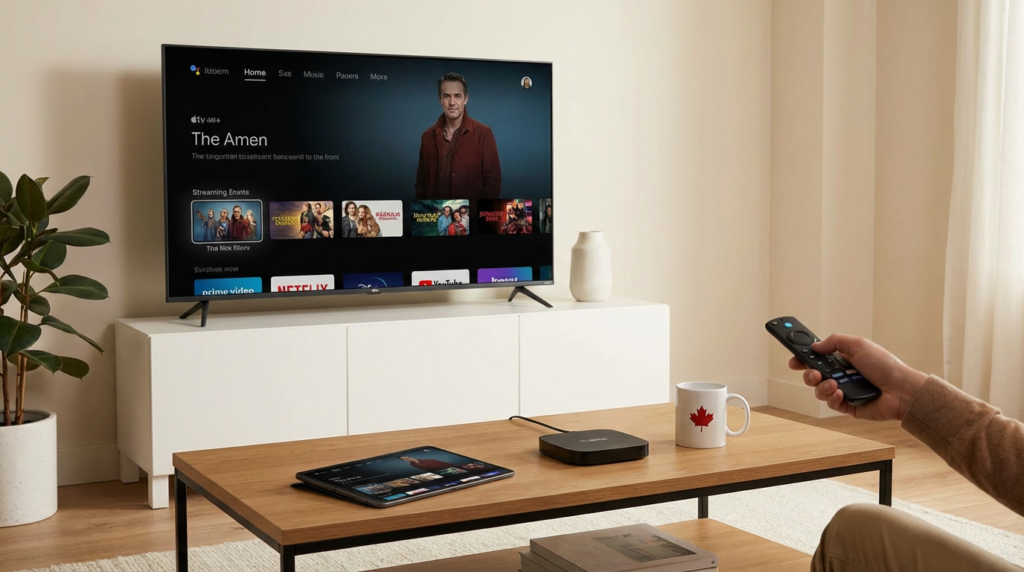
You wouldn’t buy a car without a test drive. The same logic applies to IPTV. Before you commit to a subscription, you want to know the channels load fast, the picture is sharp, and the service holds up on a busy Saturday night when the Leafs are playing. That’s exactly what an IPTV free trial Canada allows you to do — and knowing how to use one properly can save you from a bad experience with the wrong provider.
This guide walks you through what to expect from a Canadian IPTV trial, what to look for while testing, and how to make sure you’re evaluating the right things before you hand over your money.
What Is an IPTV Free Trial and How Does It Work in Canada?
An IPTV free trial gives you short-term access to a provider’s service — typically 24 to 48 hours — at no cost or at minimal cost. During that window, you can browse the channel list, test streaming quality, check the on-demand library, and see how the service performs on your actual devices and internet connection.
In Canada, trial offers vary significantly between providers. Some offer a genuine no-cost test period. Others frame it as a money-back guarantee rather than a traditional free trial. Both approaches serve the same purpose: giving you a low-risk way to evaluate the service before making a longer commitment.
It’s worth understanding that the quality of what you experience during a trial is a direct reflection of the real service. Reputable providers don’t run premium infrastructure just for trials — what you test is what you get. That’s why it matters to test the right things, not just flip through channels and call it done.
Why Testing Before Subscribing Is Especially Important in Canada
Canadian streaming needs are distinct. You likely want access to CBC, CTV, TSN, Sportsnet, and regional news channels alongside international content. Sports scheduling here means you need reliable playback during peak viewing times — NHL games, CFL matchups, and playoff runs put real pressure on a provider’s infrastructure.
Canadian internet connections also vary dramatically. A household in downtown Toronto has very different options compared to someone in a smaller community in New Brunswick or northern Alberta. Because IPTV performance depends partly on your local internet quality, testing the service in your own home, on your own connection, is the only reliable way to know if it will work for you.
If you’re still deciding whether IPTV makes sense compared to your current setup, the comparison of IPTV versus cable in Canada is worth reading before you commit to anything.
What to Look for During Your IPTV Free Trial
Channel Availability and Canadian Content
The first thing to verify is whether the channels you actually care about are included. Don’t just check that they exist — open them and watch for at least a few minutes. Canadian sports channels, local broadcasters, and French-language networks like TVA and RDI should all be present if a provider claims comprehensive Canadian coverage.
A quality provider should offer at least 500 Canadian channels as part of a broader library. If the Canadian content is thin during your trial, it won’t improve after you subscribe.
Streaming Quality Across Different Resolutions
Test channels in multiple resolutions — SD, HD, and 4K where available. Check whether the picture is consistently sharp or whether it degrades during action sequences. Sports content is a particularly useful benchmark because fast motion and camera pans quickly expose compression issues that slower content masks.
Pay attention to how long channels take to load when you switch between them. A well-run service with strong server infrastructure should switch channels in under two seconds. Delays longer than that during non-peak hours suggest the provider may struggle under load.
Buffering and Stability
Buffering is the most common complaint about IPTV services, and it’s also the most misunderstood. It can be caused by the provider’s servers, your internet connection, your router, or the device you’re using. During your trial, test on multiple devices if possible.
Watch a live channel for a full 30 minutes without switching. If you experience interruptions during that window, note when they happen. A provider with Anti-Freeze™ technology built into their infrastructure is specifically engineered to reduce these interruptions at the server level. If buffering occurs, the guide on fixing IPTV buffering issues can help you identify whether the problem is on your end or the provider’s.
On-Demand Library Quality
Live TV is only part of what a good IPTV service offers. Use your trial to explore the video-on-demand section. A strong library should include recent films, TV series across multiple genres, and content from major international networks. A library of 140,000+ movies and series is a reasonable benchmark for a premium provider.
Check a few titles to make sure the content actually plays. Some providers list content they can’t reliably stream. If titles fail to load or play with constant interruptions during a trial, the on-demand experience will be equally frustrating after you subscribe.
Device Compatibility
Test the service on every device you plan to use regularly. A trial that only works smoothly on one device doesn’t tell you much. If you watch IPTV on a Firestick in the living room and a smartphone when travelling, you need to verify performance on both.
If you’re using an Android Box, the setup process and what to look for during testing is covered in detail in the guide to IPTV on Android Box. For mobile viewers, the guide to IPTV on iPhone in Canada covers the specific steps for iOS devices.
Internet Speed Requirements
Before drawing conclusions from your trial, make sure your internet connection meets the minimum requirements for the streaming quality you’re testing. HD streaming typically requires a stable 10–15 Mbps per stream. 4K content needs 25 Mbps or more. The detailed breakdown of recommended internet speeds for IPTV can help you confirm your connection is appropriate for the quality you expect.
If your connection is borderline, consider running a speed test during your trial at different times of day. Your ISP may throttle speeds during peak hours, which would affect your IPTV experience regardless of which provider you choose.
How to Run a Proper IPTV Trial: A Step-by-Step Approach
- Request access through a legitimate provider. Contact the provider directly through their official channels. Avoid third-party trial offers, which are often bait-and-switch schemes.
- Install the app on your primary device. Don’t test on a device you rarely use. Test on the equipment that will carry most of your viewing.
- Test at different times of day. Try the service during peak viewing hours (evenings between 7–10 PM) and during quieter periods. Performance differences between these windows reveal how well the provider manages traffic load.
- Check the specific channels you watch most. Make a short list of must-have channels before you start. If TSN or Sportsnet aren’t working reliably, no amount of impressive channel count makes up for it.
- Test the on-demand library with multiple titles. Pick 3–5 titles across different genres and confirm they play without issues.
- Contact support during the trial. Ask a question through WhatsApp or email. How quickly and helpfully the team responds tells you a lot about what your subscription experience will be like.
- Note everything before the trial ends. Write down what worked, what didn’t, and any questions you have. Use that as the basis for your decision.
The 7-Day Money-Back Guarantee: A Better Alternative to a Short Trial
Some providers offer something more useful than a 24-hour trial: a full money-back guarantee that gives you a week to evaluate the service under real conditions. A 7-day window is long enough to test the service across multiple devices, different times of day, and various content types — including at least one or two major live sports events.
This approach removes the pressure of evaluating everything within a single day. You can take your time, experience the service as a genuine subscriber would, and still get your money back if it doesn’t meet your expectations. For most people, a money-back guarantee provides more useful information than a compressed 24-hour test period ever could.
This kind of confidence in their service is what separates established providers from newer, less reliable ones. A provider offering a strong money-back guarantee is signalling that they expect you to be satisfied — and that’s a meaningful form of reassurance.
Ready to start evaluating? Visit the IPTV Canada homepage to see current trial and subscription options, including plans starting at C$19.99 per month.
Red Flags to Watch for During Any IPTV Trial
Not all providers offer trials in good faith. Here’s what to watch for:
- No contact information during the trial. If support disappears once you’re testing, it won’t reappear after you subscribe.
- Channels listed but not working. A provider with 100,000 channels that largely don’t function is worse than one with 10,000 that all work reliably.
- No EPG (electronic programme guide). A basic EPG showing what’s on and what’s coming next is a standard feature of any legitimate service.
- No clear refund or cancellation policy. If there’s no written policy before you subscribe, assume there’s no refund after.
- Pressure to commit immediately. Reputable providers let you trial at your own pace. High-pressure tactics suggest a provider that knows their service won’t survive close evaluation.
Should You Use a VPN During Your IPTV Trial?
Using a VPN with IPTV can improve privacy and sometimes bypass ISP throttling — but it can also slow your connection if the VPN server is underpowered. During a trial, it’s worth testing your service both with and without a VPN to understand the difference in performance.
If you decide a VPN is right for your setup, the guide to the best VPN for IPTV in Canada outlines which options work best with Canadian providers and why.
Choosing the Right Device Before You Subscribe
Your trial experience will partly depend on the quality of the device you’re using. Older smart TVs with outdated operating systems can make any IPTV service look worse than it is. The same stream that buffers on an aging 2018 smart TV may play flawlessly on a current-generation Firestick or Apple TV.
If you’re watching on a smart TV, the setup guide for IPTV on smart TV covers which models and apps work best. Firestick users should check the dedicated guide to IPTV on Firestick in Canada before starting their trial, as the installation process has a few steps that affect performance.
What Happens After the Trial: Choosing the Right Plan
Once your trial confirms the service meets your standards, choosing a subscription plan is straightforward. Monthly plans provide flexibility if you’re not ready to commit long-term. Annual plans offer significant savings — a 12-month Diamond plan at C$79.99, for example, includes three bonus months, which works out to considerably less per month than any short-term option.
For a full breakdown of what’s currently available and what each plan includes, the guide to the best IPTV services in Canada for 2026 covers current options with honest comparisons.
Frequently Asked Questions About IPTV Free Trials in Canada
How long do IPTV free trials typically last in Canada?
Most providers offer trials between 24 and 48 hours. Some premium services offer a 7-day money-back guarantee instead, which gives you more time to evaluate the service properly under real viewing conditions.
Do I need to provide payment information for a free trial?
This varies by provider. Some trials require payment details upfront with a refund if you cancel. Others provide temporary credentials without requiring payment. Always read the terms before submitting any financial information.
Can I test IPTV on multiple devices during a trial?
Yes, and you should. Testing on every device you plan to use — TV, smartphone, tablet, streaming stick — gives you a complete picture of how the service will fit into your household.
What internet speed do I need for an IPTV trial?
For HD streaming, a stable connection of at least 10 Mbps is recommended. For 4K content, aim for 25 Mbps or higher. Run a speed test before your trial begins to establish a baseline.
Is IPTV legal in Canada?
The legality of IPTV in Canada depends on the specific service and content being accessed. For a thorough explanation of the legal landscape, the guide on whether IPTV is legal in Canada covers the relevant details clearly.
What should I do if the IPTV service buffers during my trial?
First, check your internet speed and try restarting your router. Test on a different device if possible. If buffering persists across multiple devices and connection tests are strong, the issue is likely on the provider’s side — which is a significant red flag for subscribing.
Conclusion
An IPTV free trial in Canada is only as useful as the effort you put into evaluating it. A few minutes of flipping through channels tells you almost nothing. A structured test across multiple devices, times of day, and content types tells you everything you need to know.
The key things to assess are Canadian channel availability, streaming stability during peak hours, on-demand library quality, device compatibility, and the responsiveness of support. A provider confident enough to offer a money-back guarantee is already signalling that they expect to pass your test.
If you’re ready to put a service to the test, explore the current plans and trial options at IPTV Canada — with 55,000+ live channels, 140,000+ on-demand titles, 500+ Canadian channels, Anti-Freeze™ technology, and a 7-day money-back guarantee, there’s very little risk in finding out for yourself.